Why Closing the Door Doesn’t Make it Go Away
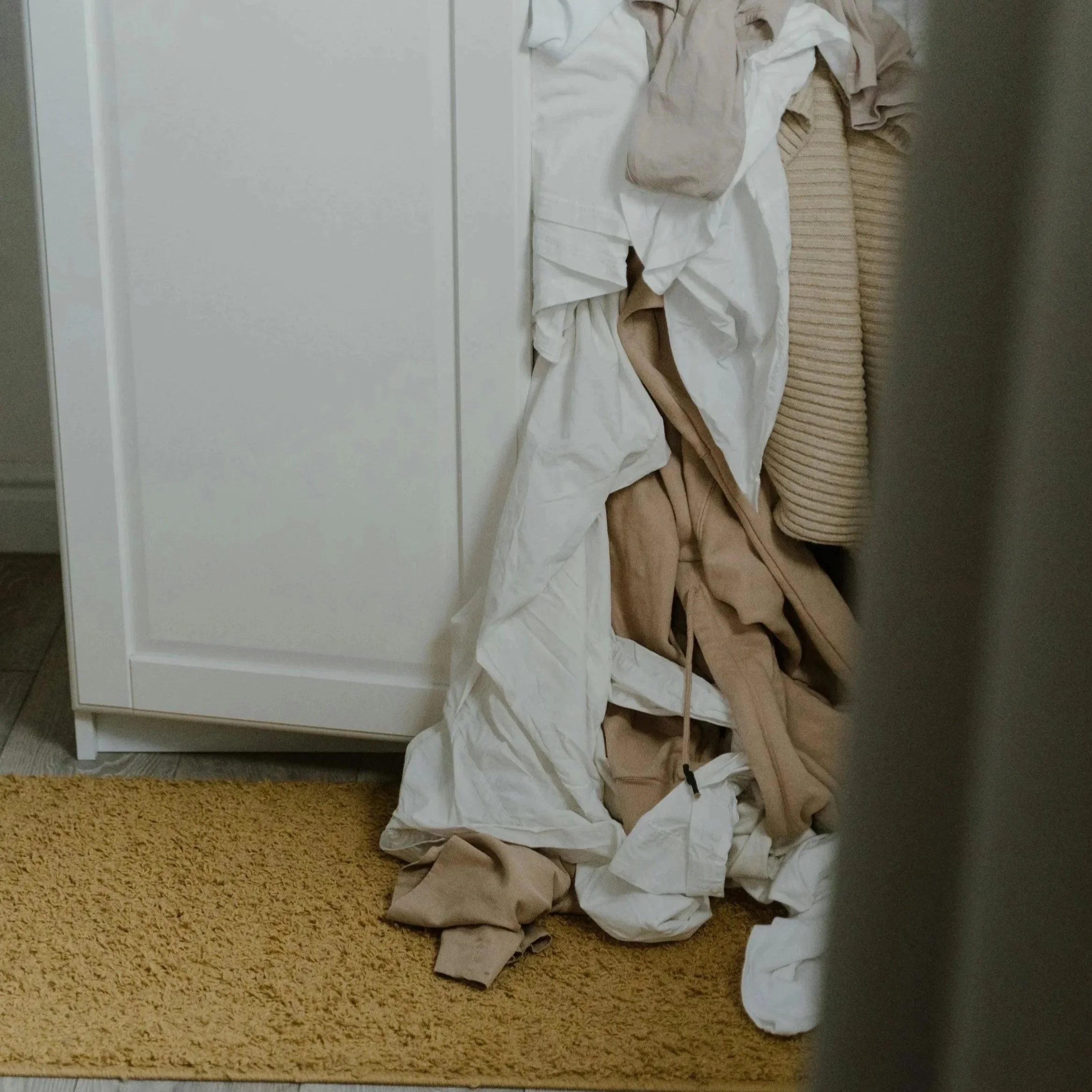
The other day I was cleaning up my house and I noticed I had 3 different throw blankets on the floor of my guest room. So I opened up my closet door, shoved the blankets in with force, because there was really no room left in there, and closed the door with the intention of ignoring the mess.
The guest room closet is the place for all of the stuff I don’t know what to do with or don’t have room for in other parts of the house. My clothes for other seasons, random decor I don’t use but I want to keep just in case, so many blankets and pillows, and to top it off I have my wedding dress stuffed in there because where else does it go.
If you’re wondering why I am talking about my guest room closet, you are likely not alone. As therapists do, I often notice things in daily life that are metaphors for the work I do. And this metaphor is called: “Stuffing it in the Closet.”
I think we all have a “closet,” you know that place we put things that we don’t know what to do with, how to cope with, or don’t want to look at. The place where we put the memories that are too hard, too emotional, and too much. The place where we hide away our shame, our despair, our grief, our anxiety, and our shattered dreams.
Yup, that closet.
I think having a closet can sometimes work for us. When we first moved into this house, our closets were empty, a fresh start. But as I have accumulated things, the closet has gotten fuller. At first putting a few things in there was fine. I used it as a place to keep things I intended to find later. It was a way to organize and keep things tidy. But over time, it became the junk drawer of closets. And it wasn’t just a place to organize, it was a place to hide all of the things I didn’t know what to do with and didn’t want to see in my home.
Now, it’s a source of overwhelm and stress. I need to go through the closet and see what is in there, but I don’t want to. There might be things I need to donate, some I need to throw out, and some I want to keep. But, the fuller the closet gets, the more overwhelming that is, and the more I put it off. Then, on a Sunday evening when I’m frantically cleaning my house to start off the week on a good note, I find myself opening my closet, stuffing a blanket in, and closing it pretending that it’s fine. But, the annoying thing is, I know that closet is full of stuff I need to get rid of even if I’m not thinking about it. I notice the stress in my body, or a reduction in calmness in my home and in my mind. It’s this nagging feeling that I just can’t shake. At times I forget about the closet and think I’m just having normal “life is hard stress,” but then a kid opens the closet and everything comes falling out.
The therapeutic process
So, what does this have to do with counseling? Therapy is the place where you can come and take everything out of the closet. You can talk through your life, your grief, your shame, your shattered dreams. You can take out everything and look at it and then we can work together to process it and put it where it belongs. This is exactly what therapy feels like to me most of the time. At the beginning we are laying everything out and seeing what is there. It is usually a bit overwhelming, but sometimes you have to make a mess to put it all back together. And as your therapist, my job is knowing the way forward and guiding you so that you don’t feel so overwhelmed.
The black hole
One more question you might be asking is what do we do once we make a mess and lay it all out. Well, the answer is: it depends. Some things just need to be noticed and acknowledged. Our brains and bodies naturally know how to move forward from there. And then there are the things that feel impossible to touch; the memories that aren’t just uncomfortable but feel like a black hole in the closet. That’s trauma.
Trauma can show up as anxiety, depression, intrusive memories, emotional numbness, or a persistent feeling that something is just not right, even when life on the outside looks fine. It’s the thing in the closet that you can feel the weight of even when the door is closed.
Thankfully, there are trauma therapists trained in specialized approaches to help you face that black hole and find healing. At Storywell Counseling in Westerville, Ohio, our therapists are trained in EMDR, an evidence-based trauma therapy that helps you process painful memories and find freedom from their grip. We cannot get rid of what happened, pretend it never occurred, or help you stuff it back in the closet. But we can help you learn how to hold it without the heaviness and bring the light back in.
You don’t have to keep the door closed
If you have been reading this post and anything from your closet is coming to mind, I encourage you to reach out and find help. Whether the closet is stuffed to the rafters and it’s bringing you daily anxiety, or it’s just a little full and you notice a small amount of stress, therapy can help you. Our therapists at Storywell Counseling value expert care backed by scientific research and create an inviting, authentic, and safe place for you to do the deep and hard work. We will guide you, support you, challenge you, validate you, and encourage you along the way.
You don’t have to keep the door closed. Reach out to Storywell Counseling in Westerville, Ohio today. Call us at 614-300-7043, email us at info@storywellcounseling.com, or visit us at www.storywellcounseling.com to schedule a consultation. Taking that first step toward healing is the bravest thing you can do.